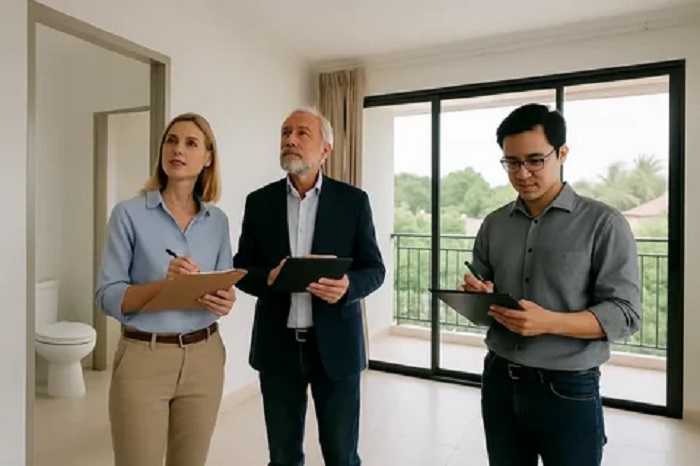
Inspecting a property in Thailand goes beyond a simple “like it or don’t like it” assessment; it’s about quickly gathering essential facts—covering legal, technical, and practical aspects. Two properties might look identical in photos, yet differ significantly in terms of noise levels, odors, water quality, the performance of air conditioning units, and the specific terms of the rental or purchase agreement.
Below is a practical checklist on Mavato.com to help you systematically evaluate an apartment, house, or villa—from the neighborhood and local infrastructure to utilities, documentation, and the final terms of the deal.


Use it, even if you have already selected a property on the website.
Preparing for a viewing: what to clarify in advance
Goal: to filter out unsuitable options before your visit and arrive at the viewing with a clear list of questions.
- Property status: is it available for your required dates? Are there any planned renovations in the building or complex?
- Type of agreement: rental (duration, renewal terms) or purchase (reservation, handover timeline, payment terms).
- Payment breakdown: what is included? (e.g., water, electricity, internet, air conditioning maintenance, waste collection, common area fees for condos).
- Deposit: amount, conditions for deductions, refund timeline, and documentation of the property’s condition upon move-in.
- Pets: are they allowed? Are there any additional requirements or deposits?
- Furnishings and amenities: what stays (kitchenware, linens, appliances), and what will be replaced or added before move-in?
- Viewing times: ideally, visit twice—once during the day and once in the evening (to check for noise, mosquitoes, parking, and lighting).
Preparing for a viewing: documents, questions for the owner, and measurements
Bring your passport/ID, a phone with a camera and voice recorder, a notebook, a tape measure (or laser distance measurer), and a flashlight. Arrange to view the property during daylight hours, and ask the owner or agent to have the necessary documents and recent utility bills ready so that you don’t have to negotiate terms verbally on the spot.
Before you head out, create a list of questions and measurements to check, and prepare a photo checklist: the building exterior/entrance, the front door, general views of each room, bathrooms, the kitchen, the balcony, the view from the windows, the electrical panel/utility meters, air conditioning units, and any visible defects. This will allow you to compare different options using consistent criteria and make a quick, informed decision.
What to check and document before signing
1) Documents and verification (ask to see and photograph these)
- Identity and authorization: the owner’s identification; if a representative is showing the property, ask for a power of attorney or written authorization to lease the unit.
- Lease agreement: a draft or template outlining the terms—lease duration, deposit, penalties, early termination policy, included expenses, and the procedure for the return of the deposit.
- Payments and bills: recent statements for electricity, water, internet, and building maintenance fees (if applicable) to see the actual costs.
- Inventory: a list of furniture and appliances along with their condition (a handover protocol), and meter readings as of the move-in date.
- Building/complex rules: access to amenities like a pool or gym, parking, and policies regarding guests, pets, noise, and smoking.
2) Questions for the owner/agent (keep them brief but specific)
- Payments: what is included in the rent; utility rates (electricity/water); and the payment process (e.g., based on meter readings, a fixed monthly fee, or via an app/office).
- Deposit: the amount; conditions for deductions; timelines for the return of the deposit; whether a portion of the deposit can be applied toward the final month’s rent.
- Internet: availability; speed/service provider; who pays for it; time required for setup (if not already connected).
- Repairs and maintenance: who is responsible for calling a technician; response time; what qualifies as “minor repairs” to be covered by the tenant.
- Air conditioning: when it was last cleaned; who pays for cleaning; how often maintenance is required.
- Pests/mold: has there been any pest control treatment; have there been any leaks; where do condensation or mold typically appear?
- Noise and neighbors: nearby construction sites; “quiet hours”; noise levels in the evening/at night; do windows face a busy road, a bar, or a construction site?
- Security: on-site security, key-card access, surveillance cameras, and policies regarding couriers or guests.
- Parking: is there an assigned space or is it first-come, first-served; cost; rules for motorcycles/cars.
- Restrictions: pets, smoking, subletting, maximum number of occupants, and guest registration policies.
- Move-in documentation: what information or copies of documents are required; is official residential registration possible (if applicable).
3) Checklist of on-site measurements (to avoid any surprises)
- Area and layout: width/length of rooms; ceiling height (if critical); dimensions of the balcony.
- Windows and lighting: cardinal direction (orientation); height of the windowsill; ventilation options; level of natural light during the day.
- Bed/mattress: actual size (single/double); clearance space on the sides; space for a suitcase/stroller.
- Kitchen: countertop/work surface; space for a microwave/oven; dimensions for a dishwasher (if you’re planning to install one); number of electrical outlets.
- Bathroom: water pressure; temperature; drainage (fast/slow); watertightness/sealing; storage space.
- Closets and storage: depth/height of cabinets; space for hangers; availability of shelves; a niche for a safe or router.
- Electrical system: number of electrical outlets in each room; location of the electrical panel; presence of presence/absence of grounding (if it’s possible to verify); suitability of the space for a workstation.
- Noise: assess this subjectively—stand quietly for 2–3 minutes near a window and then by the front door; note whether you can hear the elevator, traffic, or neighbors.
- Connectivity: check the mobile signal strength in various rooms and the quality of the Wi-Fi (if already installed).
In summary: preparing for a property viewing is not just a “formality”—it is a way to protect your time and money. If the documents confirm the landlord’s right to rent out the property, the answers to your questions align with the terms of the lease agreement, and your measurements and photos provide a clear picture of the property’s condition and potential expenses, you significantly reduce the risk of hidden costs, disputes over your security deposit, or day-to-day issues after you move in.