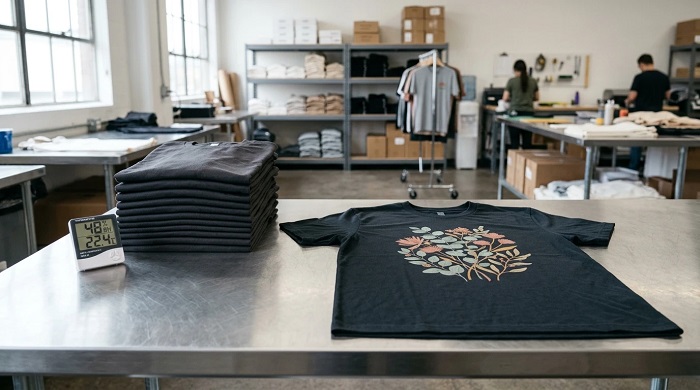
Apparel decorators operating in tropical or coastal cities know a frustration that spec sheets rarely mention: a direct-to-garment (DTG) profile that prints crisp, vibrant cotton T-shirts during a dry morning can start producing dull whites, slight ink bleed, or inconsistent curing by a humid afternoon—without anyone touching a single RIP setting.
Because commercial DTG printing relies on water-based textile pigment inks sprayed onto hygroscopic cotton fibres, ambient temperature and relative humidity directly govern both the garment and the ink delivery system. For established garment workshops running DTG in warm, high-humidity regions, controlling shop-floor climate and fabric moisture is not an optional luxury; it is a daily quality-control requirement.


How Ambient Moisture Disrupts Cotton Blanks Before Printing Begins
Untreated 100% cotton absorbs atmospheric moisture rapidly. When blank T-shirts sit in open cartons inside a non-air-conditioned warehouse during monsoon season or humid coastal afternoons, the fibres swell slightly and hold hidden dampness even when the fabric feels dry to the touch.
Loading a damp garment into a DTG workflow triggers a chain of avoidable defects:
1. Diluted pre-treatment chemistry: On dark garments, pre-treatment fluid must stay concentrated near the fabric surface to coagulate the white underbase ink. Excess moisture already inside the yarn dilutes the pre-treatment and pulls white ink deeper into the cotton, leaving colours muted.
2. Uneven drying and press marks: When a moisture-laden shirt hits a hot pre-press or curing platen, trapped steam escapes unevenly, increasing the chance of glossy platen marks or patchy curing across heavy white ink layers.
3. Raised fibre fuzz: Swollen, damp cotton fibres tend to lift more aggressively during handling, poking through the wet ink layer and making prints look faded after the first wash.
A simple pre-press hover or brief dry press before applying pre-treatment—followed by thorough drying after pre-treatment—drives residual moisture out of the garment and flattens surface fibres. Exact press temperatures and dwell times depend on the specific cotton weight, dye sensitivity, and consumable supplier’s specification rather than a single universal number.
Balancing Printhead Humidity Against Workshop Heat
Ironically, while excess moisture inside the garment hurts print sharpness, overly dry air inside an aggressively air-conditioned room causes the opposite problem at the printhead: water-based pigment ink dries prematurely on the nozzle plate, accelerating clogs and deflected jets.
Commercial DTG shops in humid climates resolve this tension by zoning their floor space instead of trying to run every process in one open room:
| Workshop Zone | Target Environmental Priority | Practical Floor Layout Habit |
|---|---|---|
| Blank storage & pre-treatment | Dry, dust-free storage; keep cartons sealed until needed | Store blank cotton off concrete floors and away from open loading doors |
| DTG print room | Stable moderate temperature and controlled relative humidity (per machine manual) | Place a calibrated digital hygrometer right beside the printer, not near the ceiling AC vent |
| Curing station (heat press / tunnel dryer) | Active heat and steam exhaust routed outdoors | Physically separate curing heat from the DTG print room so exhaust does not spike printhead temperature |
Remember that white DTG ink is particularly sensitive to environmental swings. Following the machine manufacturer’s daily white-ink circulation, nozzle-check, and capping-station cleaning routine prevents overnight humidity shifts from turning into morning downtime.
Adapting Workflow Rhythm to Seasonal Weather Shifts
In regions with distinct dry and rainy seasons, experienced DTG operators build two lightweight habits into their daily shift handover.
First, log room temperature, relative humidity, and morning nozzle-check status at the start of every shift. When a colour shift or wash-fastness complaint appears a week later, that log tells you immediately whether the issue tracked a sudden humidity spike or an exhausted pre-treatment batch. Second, avoid pre-treating stacks of shirts hours ahead of printing in an open humid room; pre-treated cotton readily draws moisture back from the air, weakening the chemical barrier before the shirt ever reaches the platen.
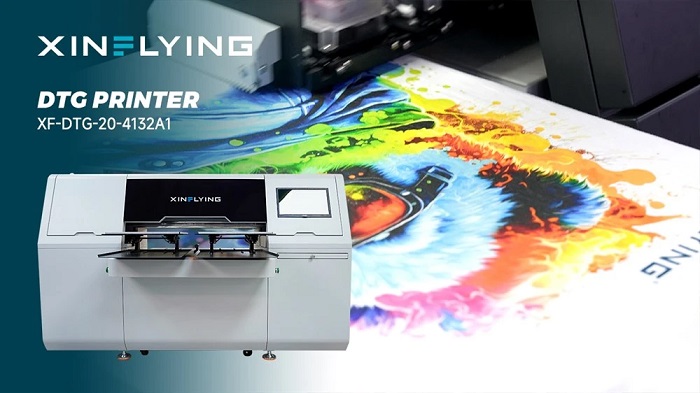
Existing garment printers planning to expand or upgrade their direct-to-garment line for demanding year-round production can review XINFLYING commercial DTG printers to see how printhead setups and white-ink circulation systems support consistent daily operation.
Before blaming ink quality or rewriting RIP curves during a humid week, check two inexpensive gauges: the hygrometer beside your platen and the moisture state of your blank cotton stack. Stabilising the air around the machine and drying the fabric before print solves more tropical DTG headaches than any software tweak ever will.