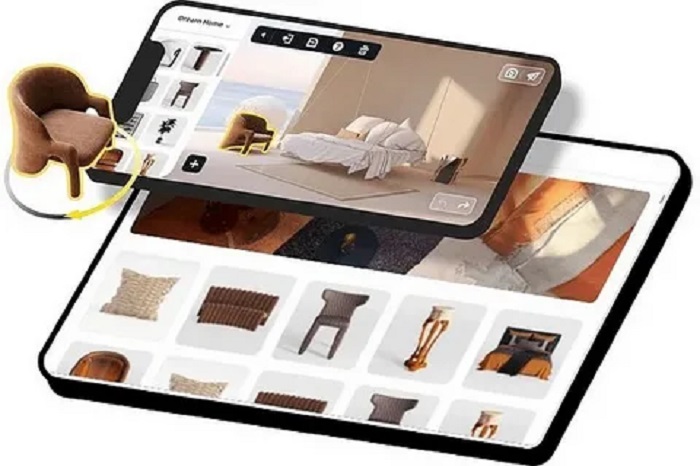
Modern interior design apps for Android and iOS allow you to quickly visualize renovation ideas: arrange furniture in 2D and 3D, select color palettes, test out finishing materials, and save multiple layout options for comparison. This article gathers the best solutions for various needs with apps every driver should have before a breakdown —from quick room sketches to detailed project planning complete with precise measurements and shopping lists.
When choosing an app, it is important to consider the user interface, the realism of the visualizations, the variety of objects in the library, measurement accuracy, and export options—ensuring you can easily share your results with family, a designer, or a contractor. As a point of reference for quality, consider how resources like CNBC Select’s ranking of roadside assistance plans highlight the importance of clear comparison criteria and transparent feature evaluation for users.


Criteria for Choosing Interior Design Apps for Android and iOS
When selecting an interior design app, it is essential to evaluate not just the quality of the visualizations, but also the practical workflow: how easy it is to manage a project during an actual renovation, make quick adjustments, and coordinate decisions with family members or contractors.
Key criteria typically include offline access, the availability of furniture catalogs, measurement precision, and project export capabilities. Together, these factors determine how well-suited an app is for immediate, real-world tasks and how easily you can bring your vision to life.
What to Look for First
An offline mode is particularly valuable if you are working at a site with poor internet connectivity or simply want to open your projects quickly without waiting for them to load. Check whether your floor plans, materials, and object libraries are stored locally on your device, and confirm that you can continue editing your project and sync any changes later.
A useful feature is the ability to locally cache textures and models, ensuring that the application doesn’t “lose” elements when there is no network connection.
Catalogs of furniture and materials save time during the selection process and help you move more quickly from an initial idea to a concrete shopping list. Check whether the library includes real-world brands—or at least high-quality, versatile generic models—and see if there are filters for dimensions and styles, or the option to add your own custom objects. It is important that these elements have accurate dimensions and clearly defined parameters—such as color, texture, and finish options—rather than serving merely as “inspirational imagery.”
Measurement accuracy is critical if you intend to use the project as a basis for ordering furniture or calculating materials. Verify whether the application supports inputting dimensions with millimeter or centimeter precision, and check for features like snapping, grids, angle locking, alignment tools, and collision detection (for instance, to identify instances where doors might overlap with furniture). If the app offers features like measuring from photos or scanning a room, keep in mind that the results will depend on your device’s sensors and the conditions under which the data was captured; therefore, tools for manual adjustment and verification measurements are highly valuable.
Exporting Your Project: Preserving Your Work and Streamlining Coordination
The project export functionality determines whether you can use your work outside the application—for example, by sharing visualizations, printing floor plans, or providing data to a designer or construction team. The bare minimum includes exporting images (renders, screenshots), while practical tasks require dimensioned floor plans, specifications, and files that are easy to view on other devices.
- Formats: availability of PDFs for floor plans and JPG/PNG files for visualizations, as well as 3D export (if needed) for use in other software.
- Layers and readability: the ability to separately export layout plans, electrical/lighting schemes, dimensions, and material legends.
- Collaboration: project sharing via links, comments, version history, and synchronization between Android and iOS.
- Quality control: options to adjust resolution, scale, page orientation, and the display of dimensions and labels.
If you are planning an actual renovation, choose an app where exports are not restricted by watermarks or limited in the free version to a point where they are unsuitable for printing or formal approval. The easier it is to share your project—and the more clearly it can be understood without your direct input—the lower the risk of errors during the procurement and installation phases.